
Visual Illusions#
Human visual perception is very powerful. We have great color vision. We are able to quickly recognize objects (e.g., other humans, food sources, predators) from complex, noisy, or even incomplete visual input. However, our visual perception has flaws. Here are two visual illusions that demonstrate this:
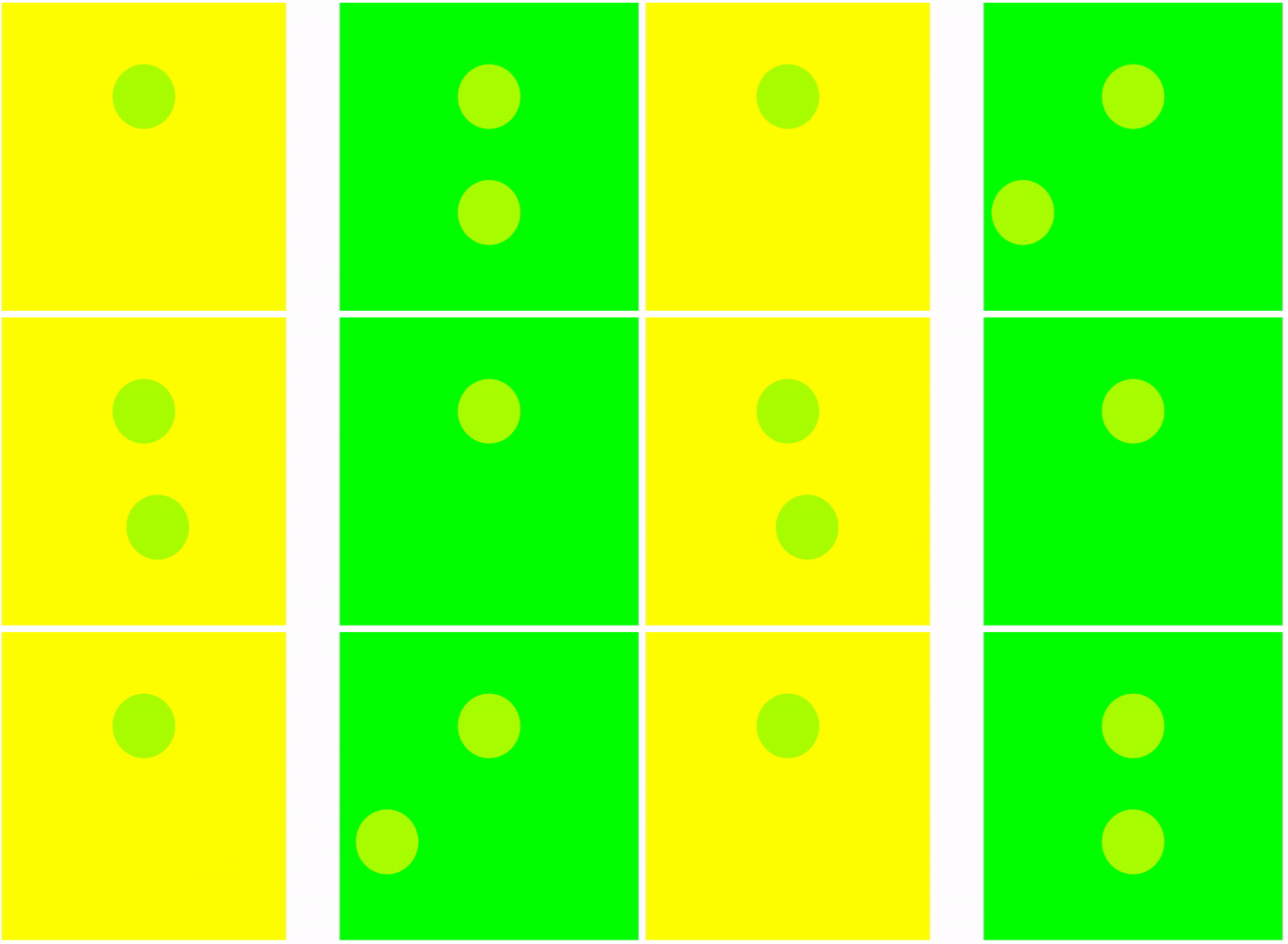
Fig. 122 Color context illusion.#
The first illusion demonstrates that color perception depends on context. There are three colored circles in this image, all of which have the same color. However, their appearance differs depending on the background color: on the yellow background the circle appears light green, and on the green background it appears light yellow.
Our powerful visual perception is achieved in part by the astounding visual processing of our brain. These flaws, or visual illusions, are in part due to this massive visual processing. For good scientific visualization of images, it is critical to understand that human vision is not truly quantitative.
This is clearly demonstrated by the second illusion. There are three squares in this animation, all of which have the same gray level. However, the background alters their perceived gray level. The true signal intensity is only revealed by measurement.
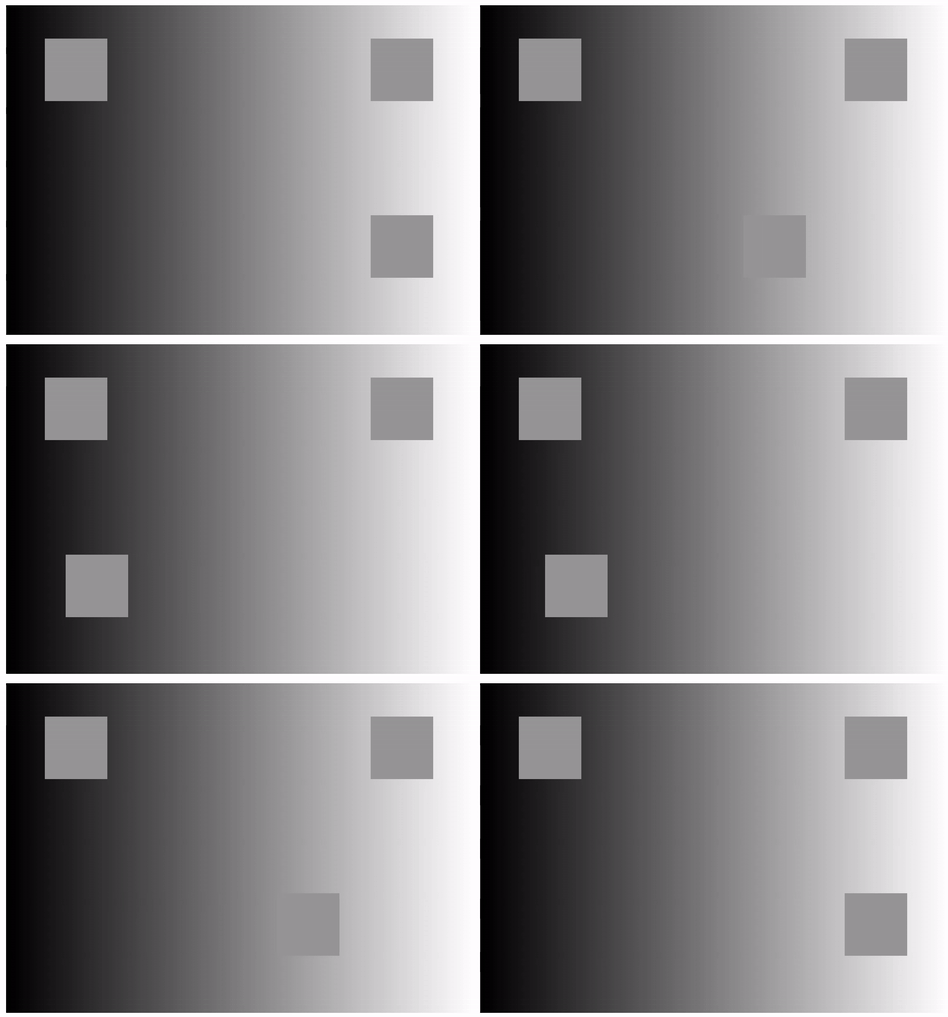
Fig. 123 Intensity context illusion.#